

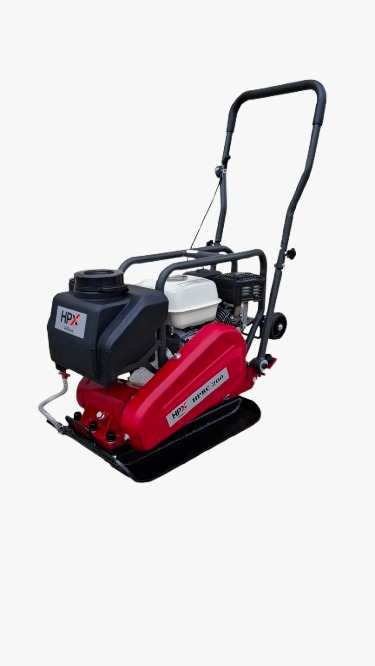
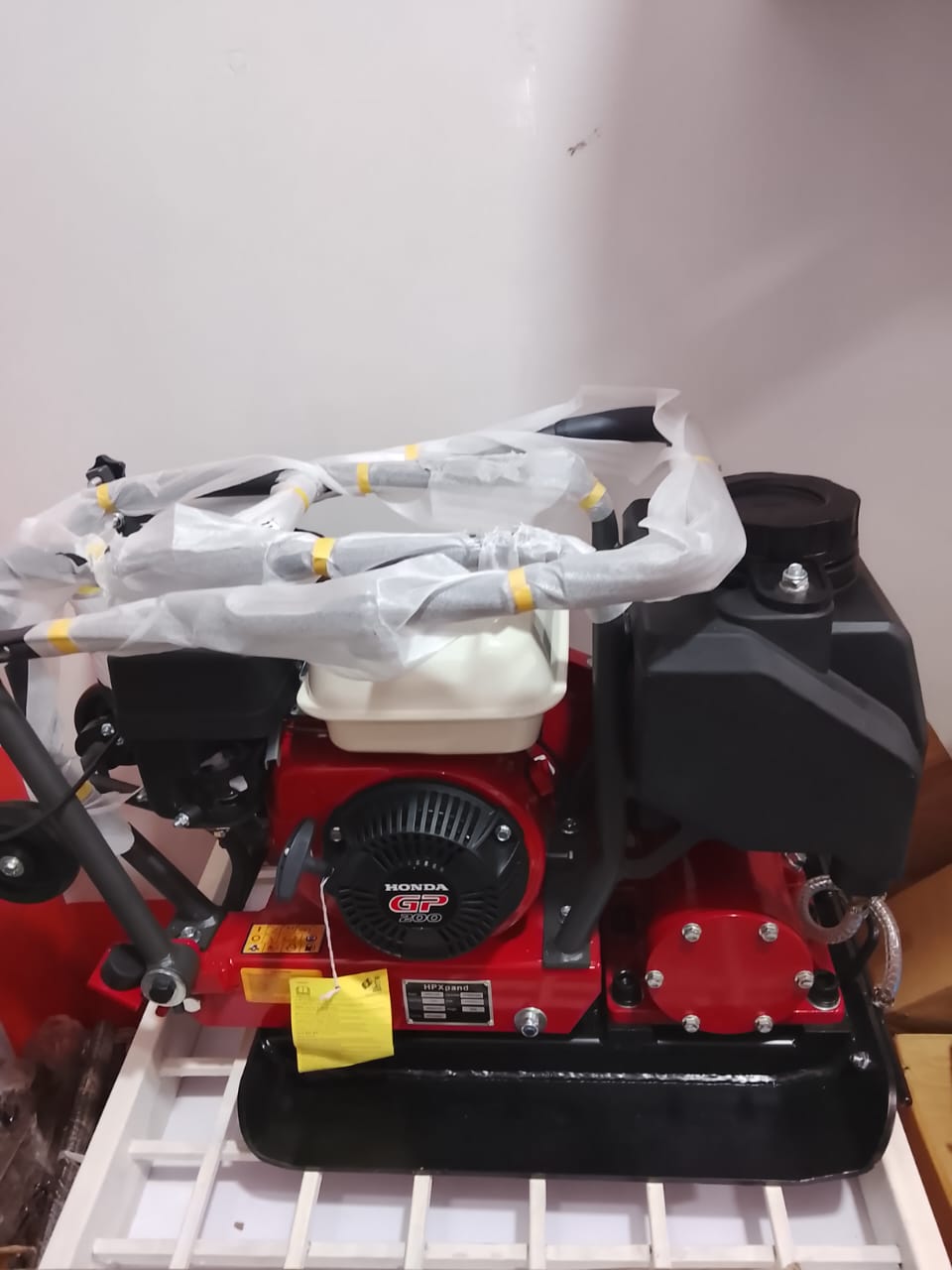
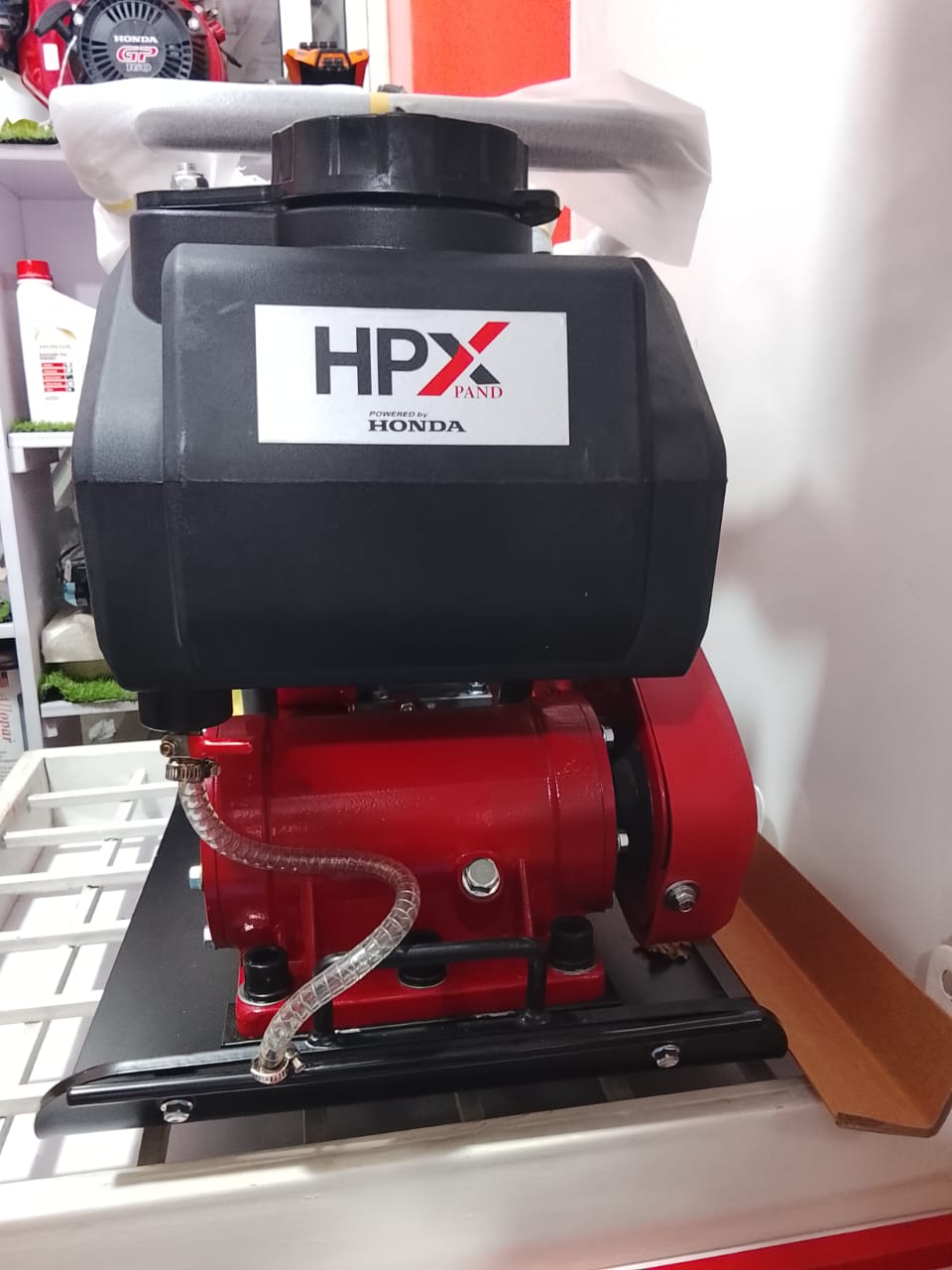
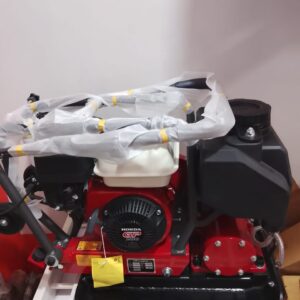
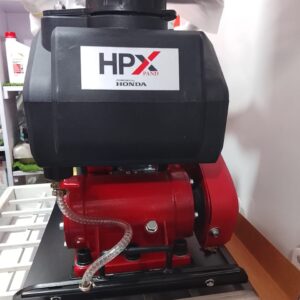
HPX HPRC 200 Reversible Plate Compactor — The One That Actually Holds Up on Site
Specifications — Start Here, Everything Else Comes After
| Parameter | Detail |
|---|---|
| Model | HPRC 200 |
| Engine | Air-Cooled, 4-Stroke |
| Power | 5.8 HP |
| Fuel Tank | 3.1 Liters |
| Impact Force | 13 kN |
| Compaction Depth | 30 cm |
| Travel Speed | 24 cm/s |
| Machine Weight | 85 kg |
| Vibration Frequency | 5000 VPM |
| Water Tank | 10 Liters |
| Base Plate | 575 mm × 420 mm |
Any contractor or wholesaler who has bought construction equipment before knows to start with the specs. These ones tell a pretty clear story — this is a serious walk behind compactor built for heavy commercial work, not occasional light use. In Pakistan, this machine is also commonly referred to as a thappa machine or tamping machine — and among the options available in that category, this one sits at the top end for good reason.
The Real Problem on Pakistani Construction Sites
Anyone who has spent real time on construction sites in Pakistan knows this situation well. The job looks done — road is laid, floor is poured, foundation looks solid. Then six months later the calls start coming in. Cracks in the floor. Road surface sinking in patches. Foundation showing signs of settlement.
Most of the time it isn’t a material failure. The concrete was fine, the asphalt was fine. The problem was underneath — soil, sand, or granular fill that wasn’t compacted properly and shifted over time. No surface treatment fixes a bad base. You either compact it right the first time or you pay for it later.
Experienced contractors around Lahore’s Brandreth Road have seen this enough times to know — cutting corners on a soil compactor machine is one of the most expensive mistakes you can make on a project. The savings upfront disappear fast when the rework starts. Whether it’s a paving compactor for a road job or a general purpose ground compactor for a foundation — the machine has to do its job properly the first time.
Plate Compactor vs Rammer vs Roller — Which One Do You Actually Need
This comes up a lot and it’s worth clearing up before going further.
A rammer — sometimes called a jumping jack — is designed for cohesive soils like clay. It works with a narrow foot and high impact, good for trench backfill where you need to get into a small area. But it’s slow on larger surfaces and not suited for granular material or asphalt work.
A roller compactor is what you see on large road projects. Efficient across big open areas but completely impractical for anything with tight corners, walls, or limited access.
A vibrating plate compactor sits in the middle and honestly handles the widest range of jobs. Sandy soil, gravel, mixed fill, asphalt base layers — a good plate compactor covers all of it. For most contractors in Pakistan doing foundation work, road base preparation, trench compaction, or floor construction, a walk behind compactor like the HPX HPRC 200 is the right tool. It’s maneuverable, powerful enough for commercial depth requirements, and practical on sites where a roller simply can’t fit. This is also why a reversible compactor specifically — rather than a basic forward-only thappa machine — makes such a practical difference on real jobs.
Why the Reversible System Changes the Way You Work
Standard plate compactors go forward. That’s fine in open ground but the moment you’re in a tight spot — next to a boundary wall, inside a narrow trench, around a column or pillar — you’re stuck repositioning by hand. With an 85 kg vibrating plate compactor, doing that repeatedly through a full working day wears operators down fast. The compaction quality in those difficult spots usually suffers for it.
The HPX HPRC 200 solves this with a single lever. One switch and the machine moves smoothly in reverse at 24 cm/s. Corners, trenches, edges near walls — none of it requires stopping and dragging the machine around. Crews move faster and the compaction is consistent across the whole surface, not just the easy parts.
30 cm Compaction Depth — Why This Number Matters
Here’s something worth understanding properly because it affects the long-term result of every job this machine touches.
A lot of compactor machines available in Pakistan’s construction equipment market compact the top 10 to 15 cm and leave the layers below relatively loose. The surface feels firm, it passes a visual check, and then settlement starts happening months later because the lower soil layers were never properly stabilized.
This plate compactor delivers 13 kN of impact force to a depth of 30 cm. That means the ground is being compacted well below where problems typically originate. Clay-heavy soils, sandy fill, gravel base layers — the depth and force combination handles all of them properly. The 575×420 mm base plate distributes vibration evenly across the full contact area so no section gets less compaction than another. What you end up with is a base that’s genuinely stable, not just firm on the surface.
Built-In Water Tank — Small Feature, Real Difference
Asphalt compaction requires water. So does working with dry cohesive soil where dust becomes a problem for both the crew and the compaction quality itself.
Most operators either carry a separate container or stop periodically to set up a water source. It breaks the work rhythm and adds time to jobs that are already on tight schedules.
The HPX HPRC 200 has a 10-liter water tank integrated into the frame. It’s there when you need it, no setup required. On a long asphalt job especially, this saves more time than it might seem.
Engine and Fuel — Where Cheaper Machines Usually Fall Apart
The 4-stroke air-cooled engine on this walk behind compactor is one of the things that separates it from lower-cost alternatives in the construction equipment Pakistan market. Whether someone calls it a compaction machine, a tamping machine, or a thappa machine — the engine quality is what determines how long it actually lasts on site.
Two-stroke engines are common on budget soil compactor machines because they’re cheaper to manufacture. They also run hot, burn through fuel quickly, and under sustained commercial use they tend to lose output or break down before the job is finished. Anyone who has pushed a 2-stroke compactor through a full-day commercial site knows exactly what this looks like.
The 4-stroke engine here runs efficiently on a 3.1-liter tank across a full working day. Less refueling, less heat buildup, more consistent vibration output from morning to end of shift. The ergonomic handle with vibration dampening means the operator isn’t absorbing shock all day either — and that matters for how much quality work actually gets done by late afternoon.
Compactor Machine Price in Pakistan — A Straight Answer
This is the question that comes up in almost every conversation, so here it is directly.
There are cheaper compactors in the Pakistani market. Some look similar on paper and cost 20 to 30 percent less upfront. The issue is that most of them are not engineered for sustained heavy use. They overheat within a few hours of continuous operation, vibration output drops off after a few months, and sourcing replacement parts becomes its own project. Factor in the lost workdays, idle labor costs, and project delays and the cheaper compactor machine almost always ends up being the more expensive decision.
The compactor machine price in Pakistan for the HPX HPRC 200 at Agro Master is competitive and it comes with something the budget options don’t — genuine spare parts availability and actual technical support. When something needs attention on a deadline-driven job, that support is worth more than the initial price difference.
Who Gets the Most Out of This Machine
Road contractors doing base preparation and asphalt layering will find this vibrating plate compactor handles both without needing to swap equipment. Foundation contractors who can’t have settlement problems showing up six months after handover will appreciate the compaction depth. Earthmoving crews working in trenches, on slopes, and around structures get the most practical benefit from the reversible system. Paving contractors who regularly move between asphalt jobs and sub-base compaction work will find this machine covers both ends without compromise.
Our kisan bhai building pakka storage facilities or permanent agricultural infrastructure on their land — this plate compactor is more than capable for that work and holds up well in open field conditions.
For wholesalers and dealers stocking construction equipment in Pakistan, the HPX HPRC 200 moves consistently. Contractors who use it come back for it, and the resale value holds because the machine has a track record for lasting.
Frequently Asked Questions
What is a plate compactor used for? A plate compactor — also called a thappa machine, tamping machine, or compaction machine in local Pakistani markets — is used to compact soil, gravel, sand, and asphalt on construction sites. It’s commonly used in road base preparation, building foundations, trench backfill, and floor construction. The vibrating base plate applies downward force that removes air pockets from the material and creates a stable, load-bearing surface.
How deep does a plate compactor compact? It depends on the machine. Lightweight compactors typically reach 10 to 15 cm. The HPX HPRC 200 reaches a compaction depth of 30 cm, which is suitable for commercial foundation and road base work where deeper stabilization is required.
What is the difference between a forward plate compactor and a reversible plate compactor? A forward plate compactor only moves in one direction. A reversible plate compactor like the HPX HPRC 200 can switch between forward and reverse with a lever, making it far more practical in tight spaces, near walls, and inside trenches.
Which compactor is best for asphalt? For asphalt work, a reversible vibrating plate compactor is generally the right choice for smaller to medium-sized jobs. The HPX HPRC 200 includes a built-in water tank specifically for asphalt compaction, and its impact force and plate size are well-suited for this application.
Is the HPX HPRC 200 available in Pakistan with spare parts support? Yes. Agro Master stocks the HPX HPRC 200 with genuine spare parts availability and technical support across Pakistan.
Final Thought
There is no shortage of compactor machines in Pakistan’s construction equipment market. Options exist at every price point and most of them will work adequately for light or occasional jobs.
For contractors running serious commercial projects where a breakdown mid-job means real money lost and real deadlines missed — the equipment has to be dependable. Not most of the time. Every time.
The HPX HPRC 200 reversible plate compactor is that kind of machine. It doesn’t need much selling on a job site. Contractors who have used it know what it does. Those who haven’t usually find out through someone who has.
Reach out to Agro Master for current pricing and availability. Single units or bulk orders — the team will take care of it.

Reviews
There are no reviews yet.