

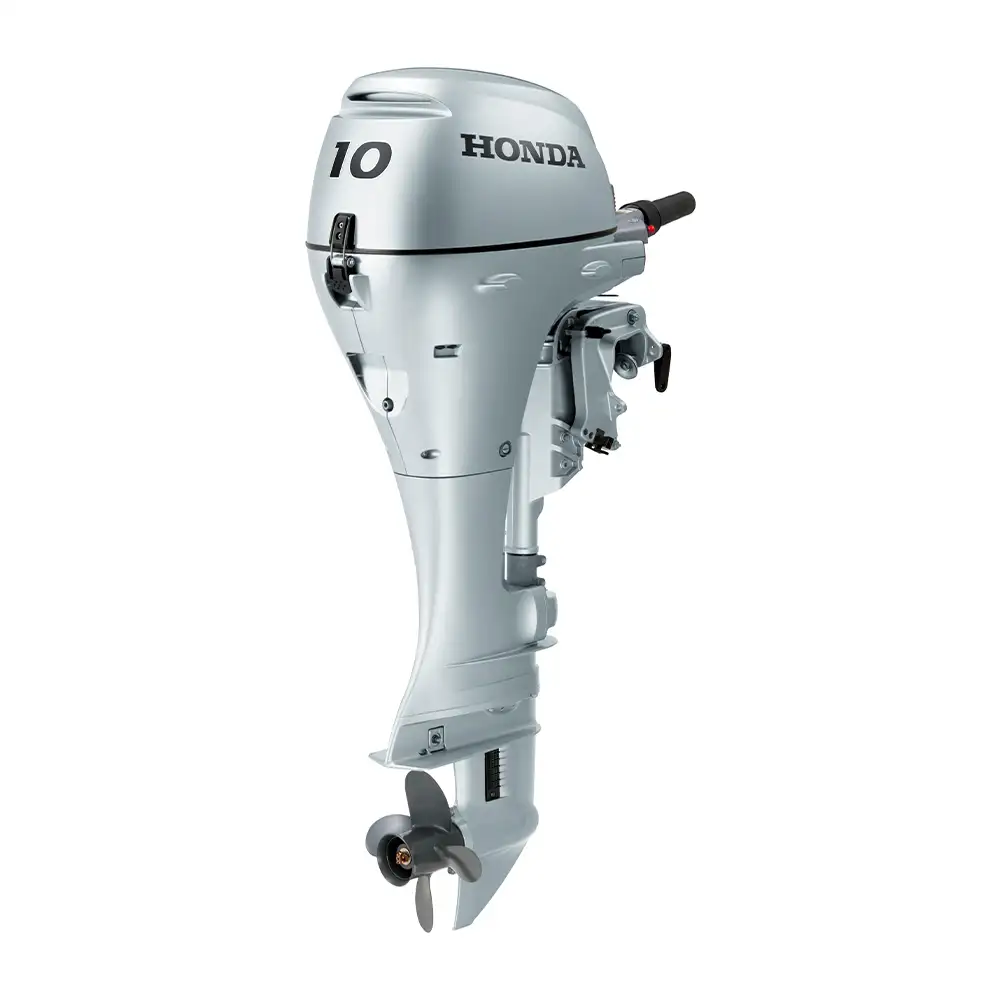
Technical Specifications: Honda BF10 Outboard Engine
| Specification Parameter | Technical Value | Operational & Marine Benefit |
| Engine Model | Honda BF10 | Heavy-duty twin-cylinder 10 HP portable marine outboard |
| Engine Architecture | 4-Stroke SOHC, 2-Cylinder / 4 Valves | Smooth balanced firing with minimal vibration across Hull |
| Displacement | 222 cc (13.5 cubic in.) | High-torque engine block built for heavy payloads and pushing |
| Bore & Stroke | 58 mm x 42 mm (2.3 x 2.5 in.) | Optimized stroke ratio delivering rapid hole-shot acceleration |
| Full Throttle RPM Range | 5,000 – 6,500 RPM | Wide operational RPM range for cruising and heavy displacement |
| Rated Output Power | 10 HP (7.4 kW) @ 5,000 RPM | Substantial horsepower output for fishing boats and rescue RIBs |
| Cooling System | Water Cooled (Thermostat Controlled) | Maintains precise operating temperature under high engine load |
| Fuel Delivery & Octane | 1 Carburetor with Accelerator Pump / 86 Octane | Instant throttle response using standard unleaded petrol |
| Ignition System | Programmed Digital Ignition (PGM-IG) | Microprocessor controls spark timing for easy starts and smooth idle |
| Starting & Electrical | Electric Start / Recoil with 12A Alternator | Effortless push-button start with high-output battery charging |
| Gear Ratio & Drive | 2.33:1 Forward – Neutral – Reverse | High-thrust gear ratio for pushing heavy loads through currents |
| Overall Width | 345 mm (13.6 in.) | Compact dual-cylinder layout fitting multi-engine transoms |
| Transom Height Options | S-Type: 381 mm (15″) / L-Type: 508 mm (20″) / X-Type: 635 mm (25″) | Three shaft lengths matching inflatable, aluminum, and deep-V hulls |
| Dry Weight Range | Short: 42 kg (92 lbs) / Long: 44 kg (98 lbs) / Extra-Long: 48 kg (107 lbs) | Exceptional power-to-weight ratio for portable 10 HP class |
What Drives the Decision Between Battery Power and 4-Stroke Gas Motors?
Evaluating an electric boat engine alongside traditional combustion outboards requires analyzing power delivery, operating range, and total equipment expenditure. Electric propulsion units offer immediate torque, zero local emissions, and whisper-quiet operation, making them attractive for short-distance lake cruising and eco-sensitive waters. However, when vessels require long hours on open water, high payload capacity, or continuous operation against heavy tides, energy density becomes the deciding factor.
Core Comparison Matrix
| Feature / Spec | Electric Boat Drive System | Honda BF10 4-Stroke Outboard |
| Fuel Source & Range | Battery Pack (Limited by kWh capacity) | Marine Gasoline (Unlimited with spare fuel tanks) |
| Power & Displacement | Instant electric torque | 222 cc High-Displacement Engine (10 HP @ 5500 RPM) |
| Charging & Onboard Power | Standard shoreline or solar charging | Built-in 12A (148W) High-Output Alternator |
| Weight Distribution | Heavy battery array required inside the hull | Lightweight 42 kg portable outboard motor |
| Emissions & Noise | Zero direct emissions, silent running | Low emissions (4-stroke), quiet pendulum-mount system |
| Ideal Operational Setup | Short routes, eco-tourism, shallow lakes | Long-distance cruising, commercial work, heavy displacement hulls |
Key Selling Points for Buyers
1. Range Assurance and Fast Refueling
Electric motors require hours to recharge once the battery drains, which limits single-day travel distance. The Honda BF10 runs on standard fuel tanks, allowing instant refilling at any dock or with portable jerry cans for continuous operation.
2. Weight Distribution and Hull Performance
Electric drives depend on heavy battery banks to achieve decent range, adding non-usable dead weight to small tenders or inflatable hulls. At just 42 kg, the Honda BF10 keeps the boat lightweight, draft-shallow, and easy to transport or mount.
3. Continuous Onboard Power (12A Alternator)
Unlike electric drives that drain energy to power shipboard devices, the Honda BF10 features a built-in 12-Amp charging alternator. It generates steady power at low trolling speeds to charge onboard electronics, navigation lights, and extra 12V batteries while running.
4. Heavy Thrust Performance
With a 222 cc displacement and an optional 4-blade Power Thrust propeller, the Honda BF10 produces strong low-end thrust in both forward and reverse. It handles high payload capacity and heavy water resistance far better than entry-level electric motors.
Direct Buying Recommendation
-
Choose Electric: If your routes are short, strictly restricted to zero-emission waters, or if silent trolling on calm, small lakes is your main priority.
-
Choose Honda BF10: If you need non-stop runtime, rapid refueling for commercial work, heavy load towing, and reliable power generation without carrying massive battery setups.
Common Ownership Pitfalls and Maintenance Strategies
Avoiding costly marine engine repairs comes down to following structured maintenance routines after every voyage.
-
Neglecting the Water Pump Impeller: Operating in muddy or sandy water wears down rubber water pump impellers. Inspect the water tell-tale stream continuously and replace the impeller annually.
-
Stale Petrol in the Carburetor Bowl: Fuel left in the carburetor over seasonal storage breaks down, clogging internal jets. Drain the carburetor float bowl or run fuel stabilizer through the system before long breaks.
-
Ignoring Gearcase Lubricant Changes: Inspect the lower gear unit oil every 50 hours for milky discoloration, which indicates water intrusion past the propeller shaft seals.
-
Skipping Anode Inspection: Sacrificial anodes protect aluminum casings from galvanic corrosion. Replace anodes when they wear down by half.
To review complete specifications, commercial marine options, and genuine power equipment catalogs, visit the official Honda Power equipment hub. Having access to genuine technical support ensures your vessel operates at peak performance season after season.
FAQs
How does a 4-stroke outboard compare to an electric boat engine for long trips?
While an electric boat engine offers quiet operation for short distances, a 4-stroke petrol engine like the Honda BF10 provides unlimited range through simple refueling, higher top-end thrust, and lower initial setup costs for multi-hour trips.
What causes variations in the overall boat engine price in Pakistan?
Horsepower output, starting systems (electric vs recoil), shaft length, power tilt options, and import duties directly dictate retail pricing across local marine suppliers.
Can the Honda BF10 charge an onboard battery while running?
Yes, electric-start versions of the Honda BF10 come equipped with a high-output 12-Amp alternator that actively recharges your 12V starter battery and runs navigation lights or fish finders while underway.
Is the Honda BF10 suitable for shallow water operation?
Yes, the BF10 features multi-stage shallow water drive positions and gas-assisted or power tilt options that allow the operator to elevate the lower unit safely above underwater obstacles.
How often should I flush my outboard engine with fresh water?
You should flush the internal cooling channels with fresh water after every use in salt or brackish water using the integrated freshwater flushing port to prevent salt crystallization and corrosion.
What size boat is best suited for a 10 HP outboard engine?
A 10 HP engine is ideal for 10 to 16-foot inflatable RIBs, aluminum fishing boats, small fiberglass utility skiffs, sailboat auxiliaries, and flood rescue crafts.


Reviews
There are no reviews yet.